


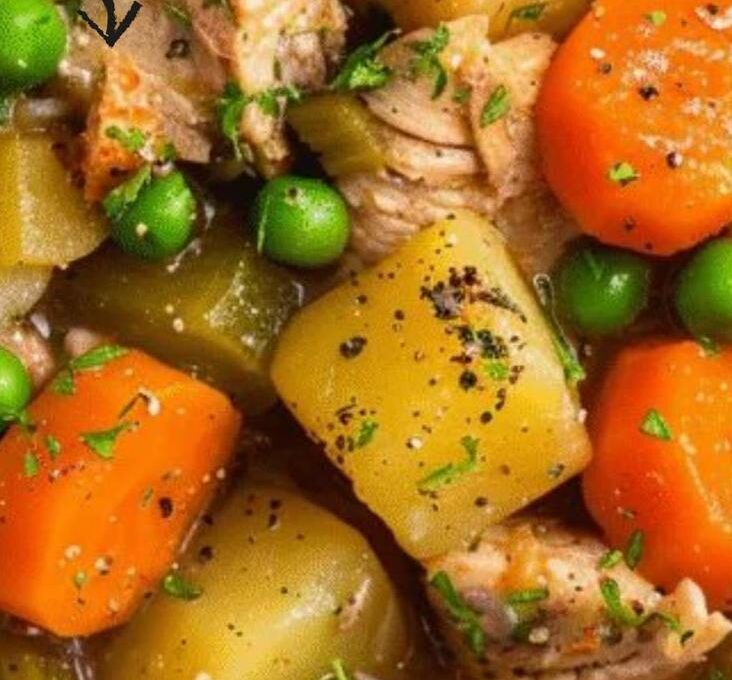
Slow cooker chicken stew combines tender chicken, potatoes, carrots, celery, and a savory broth in one hearty meal that requires little attention once cooking begins. This Slow Cooker Chicken Stew Recipe uses a brief skillet sear followed by gentle slow cooking to develop flavor while allowing the vegetables to soften and the chicken to become tender.
With boneless chicken thighs or breasts, everyday vegetables, dried thyme, garlic, and tomato paste, the stew offers a practical dinner for busy days. The broth can remain light and spoonable or be thickened with flour, depending on the consistency you prefer.
Why Slow Cooker Chicken Stew Works for Busy Dinners
Most of the preparation happens before the ingredients enter the slow cooker. After the chicken is browned and the vegetables are prepared, the covered cooker handles the extended cooking period without frequent stirring or attention.
Potatoes make the stew substantial enough to serve as a complete meal, while carrots, celery, and onion cook alongside the chicken. Using one cooking vessel for the main simmer also keeps cleanup manageable.
Another advantage is flexibility at serving time. The finished stew can be ladled directly into bowls, accompanied by bread, or served with rice or noodles when a more filling dinner is needed.
Chicken Thighs and Breasts Create Different Stew Textures
Boneless, skinless chicken thighs are a useful choice for extended slow cooking because their higher fat content helps them remain tender. They also produce a richer-tasting stew without requiring additional ingredients.
Chicken breasts offer a leaner alternative and work with the same vegetables and broth. Because breast meat contains less fat, check its tenderness toward the earlier end of the cooking window to avoid an unnecessarily dry texture.
Either cut can be left in substantial pieces for a chunky stew. Once cooked, the meat should be tender enough to separate easily with a fork, and its thickest portion should reach 165°F (74°C).
Potatoes and Vegetables That Hold Up in the Slow Cooker
For slow cooker chicken stew with potatoes, consistent vegetable cutting matters more than achieving perfectly shaped pieces. Cubed potatoes and diced carrots should be reasonably uniform so that larger pieces do not remain firm while smaller ones become overly soft.
Peeling the potatoes, as specified in the preparation, produces a more uniform texture. Keep the cubes large enough to retain some structure during the long simmer, particularly when using the lower heat setting.
Carrots and celery contribute different textures, while diced onion softens into the broth. Together, these vegetables make the stew substantial without needing a separate vegetable side dish.
Extra peas, green beans, or corn can also fit the dish. Since these vegetables are more delicate than potatoes and carrots, adding them nearer the end of cooking can help preserve their texture.
The Skillet Sear Builds Flavor Before Slow Cooking
Browning the chicken in a hot skillet develops a golden exterior that slow cooking alone does not create. The chicken does not need to cook completely during this stage; it finishes cooking in the covered slow cooker.
Avoid crowding the skillet if the pieces cannot make good contact with the hot surface. Working in batches when necessary gives the chicken a better opportunity to brown.
Transfer the seared meat to the slow cooker with the prepared vegetables. The browned surface adds savory depth as the ingredients cook together in the broth.
Broth, Tomato Paste, and Thyme Shape the Stew
Low-sodium chicken broth provides a practical base because it leaves more control over the amount of salt added. Seasoning can be adjusted after cooking, when the broth has absorbed flavor from the chicken and vegetables.
Tomato paste contributes concentrated savory flavor and a subtle tomato note without turning the stew into a tomato-heavy dish. Stirring it into the liquid helps distribute it throughout the pot.
Dried thyme and bay leaves suit the long cooking process. Their flavors develop gradually, making additional strong seasonings unnecessary for the basic version of slow cooker chicken stew.
Low and High Heat Settings for Tender Chicken Stew
Choosing the slow cooker setting depends on your schedule and the texture you want. Both settings can produce tender chicken and vegetables, but the lower setting allows more gradual cooking.
| Cooking setting | Cooking time | Best use | What to check |
|---|---|---|---|
| Low | 6–8 hours | Longer unattended cooking | Chicken tenderness and softened potatoes |
| High | 3–4 hours | A shorter cooking window | Evenly cooked vegetables and chicken doneness |
| End-of-cooking check | Before serving | Either setting | Chicken at 165°F (74°C), tender potatoes, and balanced seasoning |
Actual cooking speed can vary with the appliance, the size of the chicken pieces, and how fully the cooker is loaded. Use the stated windows as guidance, then check the food itself before serving.
Keep the lid closed during most of the cooking period, opening it only when necessary to stir or check doneness. Frequent lifting releases heat and can extend the time needed for the chicken and potatoes to become tender.
A Thick or Brothy Slow Cooker Chicken Stew
Some households prefer a stew with a relatively clear broth, while others want a thicker liquid that coats the potatoes and chicken. The optional all-purpose flour allows either result without changing the main ingredients.
For a thicker stew, whisk the flour with a small amount of broth until smooth before incorporating it into the cooker. This helps prevent dry flour pockets and uneven thickening.
Leaving out the flour produces a more broth-forward consistency. Cornstarch is another possible thickener, although it should be mixed with cold liquid before being stirred into hot stew to reduce clumping.
Remember that potatoes can also contribute some body as they soften. Assess the finished consistency before deciding whether additional thickening is necessary.
Slow Cooker Chicken Stew Mistakes to Avoid
Small preparation choices can affect the texture of the chicken, the tenderness of the potatoes, and the consistency of the broth. The most useful corrections address those specific outcomes.
- Uneven potato cubes: Cut pieces to similar sizes so they soften at approximately the same rate.
- Skipped browning: Sear the chicken when possible to develop the golden surface that adds savory flavor.
- Clumped flour: Mix the optional thickener with broth before adding it to the cooker.
- Excessive lid lifting: Keep the cooker covered to maintain steady cooking heat.
- Overcooked breast meat: Check lean chicken toward the beginning of the suggested cooking window.
- Forgotten bay leaves: Remove both leaves before ladling the stew into bowls.
If the vegetables are still firm, continue cooking until they soften. When the chicken is already cooked through, avoid extending the cooking period longer than necessary, especially when using breasts.
Serving Chicken Stew With Bread, Rice, or Noodles
Crusty bread is a natural accompaniment because it can be dipped into the savory broth. A warm bowl of stew and a piece of bread make a complete, straightforward dinner.
For a more substantial serving, spoon the stew over cooked rice or noodles. Both options work particularly well when the broth remains relatively loose.
Finish with chopped fresh parsley if desired. Add it just before serving so its color and fresh herbal character remain noticeable.
Optional Vegetables for a More Flexible Chicken Stew
Leftover vegetables can be useful additions when their cooking characteristics suit the stew. Peas, green beans, and corn are particularly compatible with the chicken, potatoes, and mild broth. For a thicker, creamier dish centered on corn, crockpot chicken corn chowder combines chicken and sweet corn in a hearty slow-cooked meal.
Consider the existing balance before adding large quantities. Too many extra vegetables can crowd the slow cooker and reduce the amount of broth available to surround the ingredients.
When using quick-cooking vegetables, add them late enough to avoid unnecessary softening. The chicken and potatoes should remain the central components of the finished dish.
Creamy Chicken Stew With a Richer Finish
A creamy variation can be made by stirring in heavy cream or sour cream during the last half hour of cooking. The original preparation suggests one cup for this variation.
Use gentle heat after adding dairy, especially sour cream, which can separate when exposed to prolonged high temperatures. Stir carefully so the potatoes retain their shape.
Fresh thyme or rosemary added shortly before serving can provide a more pronounced herbal finish. Choose a modest amount initially, since fresh rosemary can have a strong flavor.
Refrigerating and Freezing Leftover Chicken Stew
Leftover slow cooker chicken stew should be transferred promptly into shallow, airtight containers for cooling. Refrigerate within two hours of cooking, avoiding an extended period at room temperature.
Refrigerated leftovers can generally be kept for three to four days. For longer storage, freeze portions in suitable freezer-safe containers for up to three months.
Potatoes may become softer after freezing and thawing, so the reheated stew can have a slightly different texture. Freezing smaller portions makes it easier to thaw only what is needed.
Thaw frozen stew in the refrigerator, then reheat thoroughly to 165°F (74°C). Stir during reheating to distribute heat through the chicken, vegetables, and broth.
Stovetop Chicken Stew Without a Slow Cooker
A large pot on the stovetop can be used when a slow cooker is unavailable. The same combination of seared chicken, vegetables, seasonings, and broth can simmer gently until tender, generally within about one to two hours.
Unlike a covered slow cooker, a stovetop pot may lose more liquid through evaporation. Monitor the simmer and add a little broth if needed to keep the ingredients from drying out.
Maintain a gentle simmer instead of a vigorous boil. This provides more control over the tenderness of the chicken and helps keep the potato pieces intact.
Seasoning Adjustments for a More Savory Stew
Salt and pepper are easiest to balance after the chicken and vegetables have finished cooking. Taste the broth before adding more, particularly if the chicken broth already contains sodium.
Paprika or cumin can be used for a different flavor profile. Add either seasoning conservatively so the thyme, garlic, and savory broth remain recognizable.
Fresh herbs offer another finishing option without changing the cooking process. A small amount added just before serving provides a different effect from dried herbs simmered throughout cooking.
Easy Slow Cooker Chicken Stew for Make-Ahead Meals
Preparing the vegetables in advance can shorten the hands-on work when dinner needs to start. Keep prepared ingredients refrigerated and store raw chicken separately until cooking begins.
For a make-ahead dinner, an easy slow cooker chicken stew is particularly convenient because the vegetables and meat cook together. The main consideration is selecting a cooking window that suits the chicken cut and your schedule.
Cooked leftovers also provide a practical next-day meal. Reheat a portion with its broth so the chicken and potatoes warm evenly, adding a small splash of broth if the stew has thickened during storage.
Tender Chicken and Evenly Cooked Potatoes Define the Finished Stew
Golden-browned chicken, evenly sized potatoes, and a steady covered simmer are the key decisions behind a well-balanced slow cooker chicken stew. Each helps the finished bowl retain distinct pieces of meat and vegetables while developing a savory broth.
Once the chicken is safely cooked and the potatoes are tender, the remaining decisions are personal: a lighter broth or thicker consistency, a simple parsley garnish, or a creamy finish. Those adjustments can change the serving experience without altering the essential character of the stew.
Slow Cooker Chicken Stew Questions About Frozen Chicken, Doneness, and Leftovers
Can I put frozen chicken directly into a slow cooker?
Use thawed chicken for slow cooking. Frozen chicken can spend too long warming through the temperature danger zone in a slow cooker, so adding extra cooking time is not a dependable food-safety solution. Thaw chicken safely in the refrigerator before beginning.
How can I tell whether the chicken is fully cooked?
Insert an instant-read thermometer into the thickest part of the chicken, avoiding contact with the cooker or other ingredients. The internal temperature must reach at least 165°F (74°C). Color and tenderness alone cannot reliably confirm safe doneness.
Can I use bone-in chicken thighs?
Bone-in thighs are suitable for a variation of the stew and can contribute additional flavor during cooking. Remove the bones carefully after the meat is cooked, checking that no small pieces remain before serving.
Why are my potatoes still firm when the chicken is tender?
Potato pieces that are substantially larger than the others may need additional cooking. Check several pieces with a fork, particularly those near the center of the cooker. Continue cooking as needed while monitoring the chicken to prevent excessive drying.
Can I prepare crockpot chicken stew the night before?
Vegetables can be chopped ahead and refrigerated in covered containers. Keep raw chicken refrigerated separately and combine the ingredients when ready to begin cooking. Avoid leaving an assembled cooker of raw ingredients at room temperature overnight.
Can leftover stew be reheated more than once?
Reheat only the portion you intend to eat whenever possible. Keep the remaining stew refrigerated, and heat each serving thoroughly before eating. Repeated warming and cooling can reduce quality and increase food-safety risks if the stew is handled improperly.
Slow Cooker Chicken Stew Recipe with Potatoes and Carrots
Ingredients
Method
- Dry the chicken thighs or breasts with paper towels, then lightly season both sides with salt and black pepper.
- Place a large nonstick skillet over medium-high heat. Brown the chicken for approximately 2–3 minutes on each side, just until the exterior develops a light golden color. Transfer the partially cooked chicken to the slow cooker.
- Arrange the diced carrots, celery, onion, cubed potatoes, minced garlic, and bay leaves around the chicken in the slow cooker.
- Combine the chicken broth, tomato paste, and dried thyme with a whisk. For a thicker stew, first blend the optional 1/4 cup flour with a little cold broth until no lumps remain, then whisk this mixture into the rest of the broth.
- Add the prepared broth mixture to the slow cooker, covering the chicken and vegetables. Season with salt and black pepper to taste, then carefully stir the liquid to spread the seasonings evenly.
- Secure the slow cooker lid and cook on LOW for 6–8 hours or HIGH for 3–4 hours. The stew is ready when the carrots and potatoes are easily pierced with a fork and the chicken registers 165°F (74°C) internally.
- Discard both bay leaves. If the chicken remains in large pieces, use two forks to separate it into smaller, manageable portions, then mix it back into the stew.
- Sample the broth and add more salt or black pepper if necessary. Divide the hot stew among serving bowls and finish with chopped fresh parsley, if using.